

Three Days in El Salvador: From El Tunco’s Surf Culture to San Salvador’s Urban Core

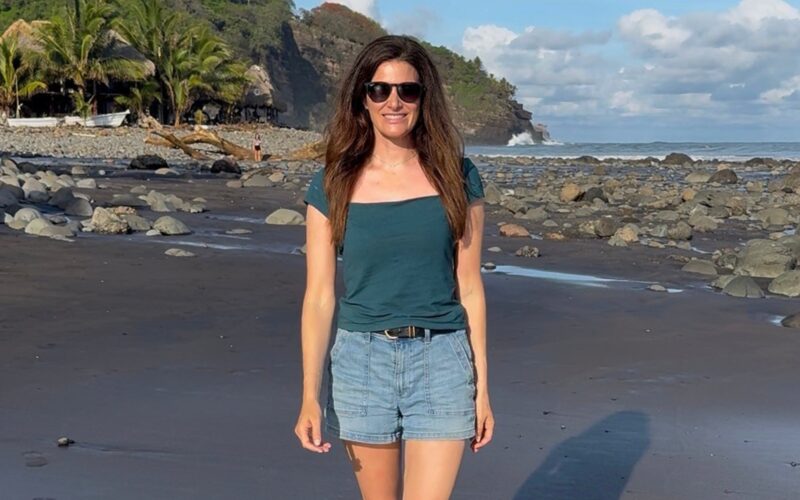
Having spent years working in tourism, I was curious to see firsthand what was driving El Salvador’s record tourism growth. A four-hour flight from Washington, D.C., and a World Surf League competition on the Pacific coast provided the perfect excuse. Over three days, I explored El Tunco and San Salvador, discovering a destination where surf culture, local hospitality, and a growing international spotlight are helping redefine how travelers view the country.
Day One: Settling into El Tunco
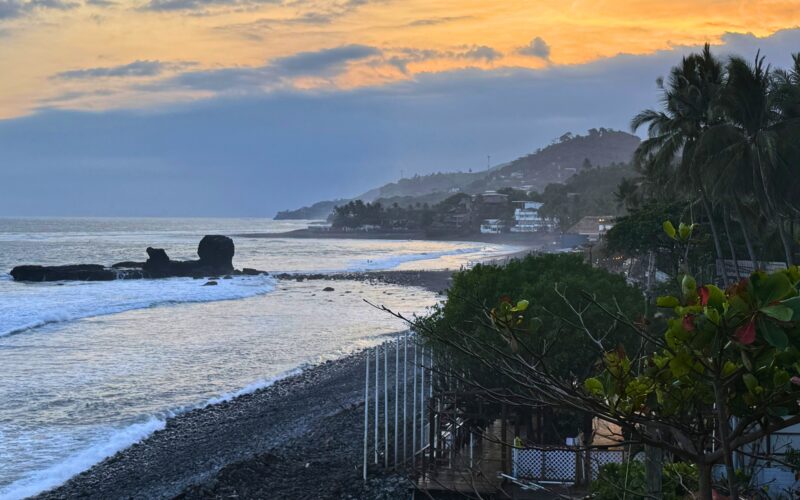
After checking into Roca Sunzal, I quickly realized that its location was hard to beat. The complimentary breakfast was served at a restaurant perched directly above the coastline, with views of El Tunco’s iconic rock formation and the Pacific beyond. The signature Roca Chilaquiles arrived piled high with crisp tortilla chips, tender chicken, eggs, avocado, and vibrant sauces. Sitting above the water with nowhere else to be, I found myself appreciating the simple luxury of a slow morning.
Unlike many beach destinations, this stretch of coast isn’t ideal for swimming or sunbathing. The shoreline is rocky, and the ocean belongs to the surfers, who can be spotted deep in the waters from sunrise until dusk.
My first day was spent exploring El Tunco. The small surf town is easy to navigate on foot, with colorful murals, cafés, street vendors, and yoga classes tucked along streets. I enjoyed simply wandering and taking in the atmosphere. Dogs roamed freely through town, surfers carried boards down to the water, and the pace of life felt noticeably slower than back home.
As evening approached, I returned to the water, this time settling in at Cafe Sunzal to watch the sunset. The sky gradually shifted from blue to shades of gold and pink, casting a glow across the coastline. Below, waves crashed against the volcanic rocks as surfers lingered in the water, reluctant to call it a day.
Day Two: San Salvador
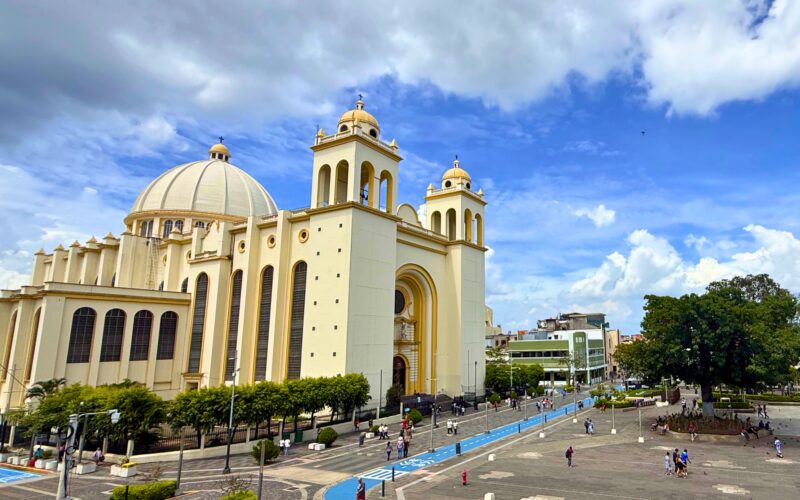
About an hour from El Tunco, San Salvador offered a completely different side of El Salvador. After the laid-back rhythm of the surf town, the energy of the capital felt warm and inviting.
I slipped into two of the city’s churches that afternoon, catching the end of Mass at Metropolitan Cathedral of San Salvador before standing beneath the soaring stained-glass ceiling of Iglesia El Rosario. As the light shifted overhead, the interior transformed into a kaleidoscope of color. Peacefully, I paused in the middle of the city. Even with the movement and noise outside, the interiors carried a sense of calm and connectedness that stayed with me long after I left.
Another highlight for me was the National Palace, whose architecture and ornate details immediately drew me in. Nearby, the National Library (BINAES) felt like a surprising contrast to the historic buildings surrounding it. As I walked in, I was immediately struck by how much the space seemed designed around families and curiosity. Beanbags sprawled across entire rooms, children climbed through play areas and ball pits, and tree-inspired decor stretched from floor to ceiling, creating a sense of calm.
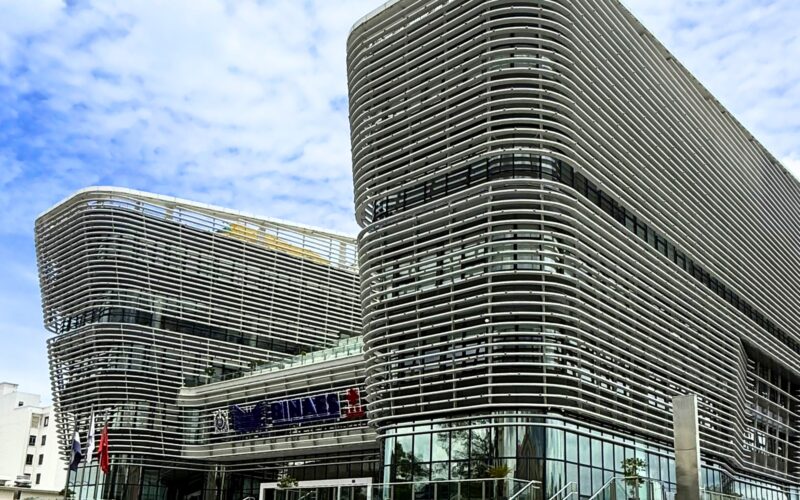
On the upper floors, the library balanced imagination with technology, featuring themed spaces inspired by Game of Thrones, Star Wars, and The Lord of the Rings, alongside flight simulators, a VR room, a gaming zone, makerspaces, and robotics labs. The National Library felt less like the quiet libraries of my childhood and more like a community living room designed to spark creativity and reward curiosity.
The beaches may have drawn me to El Salvador, but San Salvador gave the trip its depth. Exploring the capital added layers of history and culture that made the experience feel complete.
Day Three: World Surf League and Learning to Surf
The international nature of the World Surf League competition became clear before I had even reached El Tunco. On my flight into El Salvador, a friend of Japanese surfer Kanoa Igarashi arrived carrying a set of surfboards that had been flown in at the last minute so the competitor could still participate after his original boards were damaged.
In the days after, although weather conditions temporarily halted the competition, my time in El Tunco led to conversations with organizers and spectators from around the world, highlighting the event’s growing international appeal.
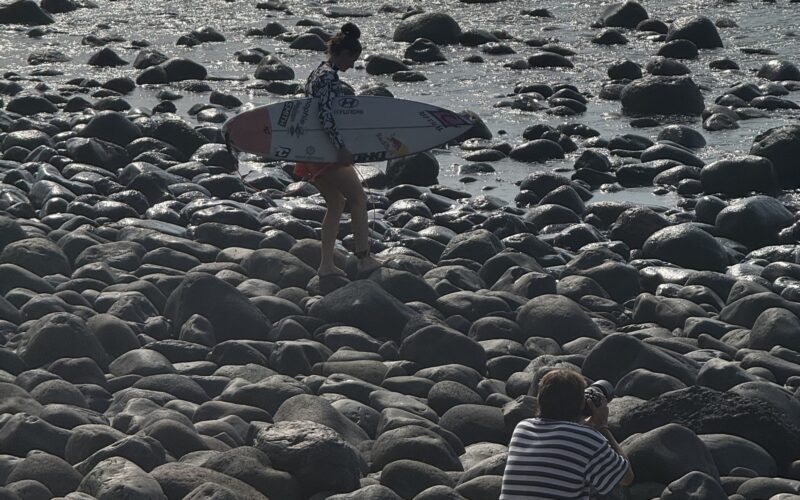
On competition day, I arrived early for the opening heats, joining spectators along the shoreline. Surfers watched the sets roll in, waiting for the wave that would give them their best chance to score.
Brazilian flags waved throughout the crowd, gathering to cheer on world-renowned surfer Ítalo Ferreira. The energy was contagious. Even as someone who hadn’t followed professional surfing before the trip, I found myself caught up in the excitement of the competition and the culture surrounding it.
By the end of the day, I decided it was time to give surfing a try myself.
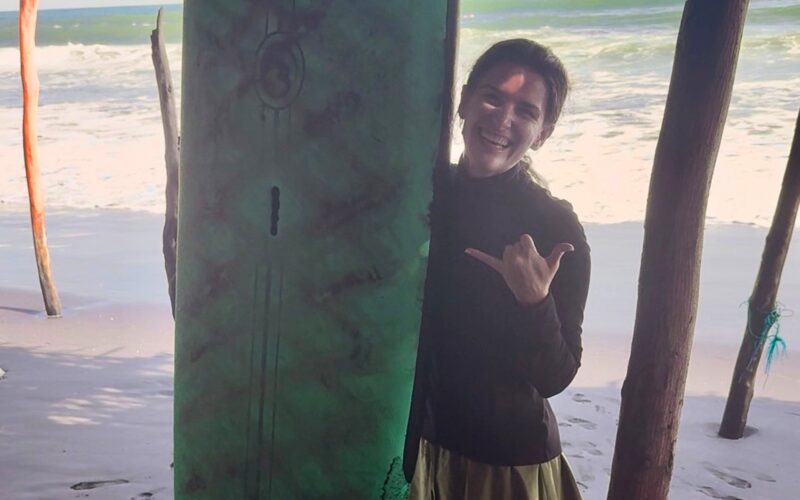
My lesson with Wayo Surf began with a ride in the back of a pickup truck to a secluded black-sand beach. Before entering the water, instructors provided lessons in the shade, covering the basics of paddling and positioning. Eventually, I practiced how to stand on the board. In the water, each participant was paired with their own instructor, allowing for one-on-one guidance and encouragement.
Somewhere between wiping out and bumping my nose on a surfboard, I gained a newfound respect for the athletes I’d spent the morning watching compete.
More Than a Surf Competition
I arrived in El Salvador for the World Surf League competition, but surfing became only one part of the story. My experience was shaped just as much by the food and flavors, the architecture of San Salvador, and the laid-back rhythm of El Tunco. The trip reminded me that sports tourism is rarely just about the competition itself.
A sporting event may provide the reason to travel somewhere new, but the experience often becomes an opportunity to discover a different culture and learn something about yourself along the way. In the end, the destination becomes as memorable as the competition.