

Why Puerto Rico Still Wins for a Long Weekend Escape from the East Coast in 2026

Rising airfare has reshaped how many Americans approach travel in 2026. Domestic economy fares are up 21% year over year, according to Airlines Reporting Corp. data cited by CNBC, yet travel agency ticket sales rose 12% in March, an indication that demand for leisure travel remains strong even as costs climb.
That tension helps explain why Puerto Rico continues to hold steady appeal, particularly for East Coast travelers seeking a short-haul escape that still feels distinctly tropical.

Why Puerto Rico Remains an Easy Caribbean Escape from the East Coast
After a long weekend on the island, what stood out was not affordability alone, but ease — the kind of travel experience that can feel rare.
Within four hours of departing Baltimore, the landscape shifts dramatically. City highways give way to warm Caribbean water, with snorkeling excursions and beachfront dining readily available along Puerto Rico’s northern coast. No passport, currency exchange, or extended PTO is required to make the transition.
For travelers balancing tighter budgets and limited vacation time, that simplicity carries new weight. Puerto Rico occupies a narrow but appealing middle ground in that it’s close enough to turn into a three- or four-day trip, yet immersive enough to feel like a true departure from routine.
Staying in Isla Verde Offers Convenience and Beachfront Access
Staying at Courtyard by Marriott Isla Verde Beach Resort underscored how geography shapes the experience. The beachfront property, currently undergoing renovations, sits directly on Isla Verde Beach and within easy reach of Old San Juan. That proximity removes much of the logistical friction that can be associated with Caribbean travel, allowing days to naturally unfold between the shoreline, local dining, and the island’s historic core.

Tourism Continues to Shape Puerto Rico’s Economy and Recovery
Although Puerto Rico is not always positioned as the lowest-cost Caribbean destination, evaluating it solely through a “budget” lens overlooks a larger reality that tourism remains central to the island’s economy.
Conversations with hospitality staff and excursion guides throughout the weekend reflected that ongoing importance. One guide noted that recovery from past hurricanes continues to shape access within El Yunque National Forest, with some hiking routes adjusted over time. As a result, certain well-known waterfall stops are not consistently included in standard itineraries.
These subtle shifts speak to a broader, ongoing process of recovery that is still visible in parts of the island. At the same time, tourism continues to sustain livelihoods across communities that depend on consistent visitor flow.
Beyond the Beach: The Culture and Charm of Old San Juan
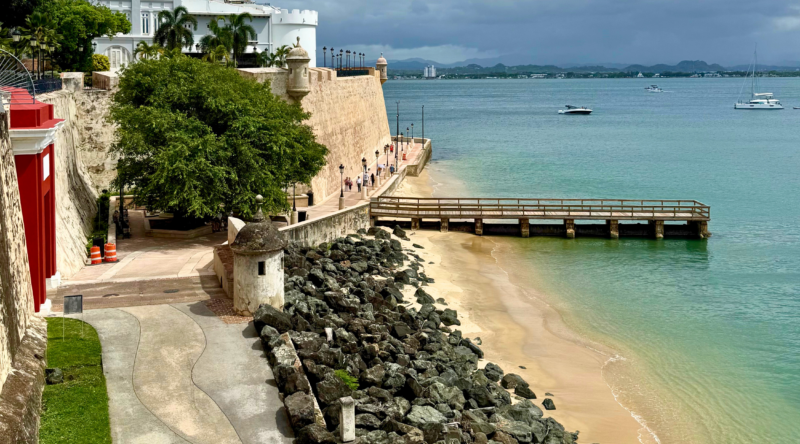
Beyond the beach, Puerto Rico’s appeal lies in its layering of Old San Juan’s pastel façades, cobblestone streets, and a growing culinary scene, all adding a cultural dimension that distinguishes it from many short-haul tropical destinations. It’s an easy addition to a weekend itinerary, but not an interchangeable one.
Why Puerto Rico Still Feels Worth the Trip in 2026
By the time the return flight landed back in Baltimore, the trip felt extended in the best possible way. It was compact in distance, but expansive in experience.
Puerto Rico may not be framed as a “bargain” destination in 2026. However, for many East Coast travelers, it continues to offer something valuable: a seamless, accessible Caribbean escape that feels rich in place, culture, and ease.